Showing posts with label German Customs. Show all posts
Showing posts with label German Customs. Show all posts
Sunday, July 22, 2012
Word Up: noch ein Zauberspruch
Just when you think you are getting the hang of this German thing, you end up at a kids' party where a magician asks for the magic word, or Zauberspruch, and everybody takes a deep breath and intones in bored unison, "Hocus pocus [okay, all good - but wait - what? they're still going-] filibus, drei schwarzen Käter." That's "fake Latin, fake Latin, fake Latin, three black tomcats" - in case you were wondering. I was, but I managed to catch on pretty quickly before I embarrassed myself in a room full of 8-year-olds. You should have seen the looks they gave me when I sang "Happy Birhday" - which for some reason is always sung here in English - without trying to sound like Werner Herzog.
Tuesday, June 19, 2012
Europameisterschaft: Playing (soccer) with Fire

For those of you who are out of earshot of Europe right now and can't hear all the honking cars, we are in the middle of the Euro Cup, known here in Germany as the Europameisterschaft or EM. For Germans, there is no need to include in the title the details of exactly which "Meisterschaft", or championship, is up for grabs, because when it comes to sports, the answer could only be soccer. Or, as some prefer to call it, football. They, of course, mean soccer.
There are several precautions you have to take as a foreigner during Euro Cup fever. The first one is to pay attention to the colours you are wearing, because all of a sudden everyone is paying particular attention to your fashion choices. Black pants, red shirt and gold earrings means you are for Germany. Green backpack, red shorts and white tee means you support Italy. Red, white, and blue means you could support any one (or all) of the remaining European countries, from Croatia to the Netherlands. Depending on your outfit and the various wins and losses of the day, you will be the victim of honking cars or booing pedestrians at intersections and along sidewalks.
(Whether it's Germans in particular or Europeans in general, I've discovered that national colours really mean something here. I mailed a package to Pennsylvania via the increasingly undependable Deutsche Post the other day, and the post office clerk held up a long closing-time line for five minutes as he dug out a pin bearing the state flag of Pennsylvania from the back storage room to prove to me that the glorious flag of the Keystone State and the German postal service share the same colours. Spooky. I hope he called the writers for National Treasure III.)
Second rule of thumb: do not attempt to play any sports other than soccer within the designated two week period of Euro Cup competitions. Carrying a basketball around the city last weekend raised many more eyebrows than almost anything else I could have paraded around with in Germany. The only other thing I can think of would have landed me in jail. Anyway, there were honks. There were stares. An old man toddling about in a newsboy cap and his Sunday best tried to smack the ball out of my hands as I was walking down the street. I thought for a moment he might be riffing on this moment in the Germany vs. Netherlands game, made briefly legendary by the internet, where the German coach playfully hit a soccer ball out from under a distracted ball boy's arm. I quickly came to my senses, however. Meme would not be in this man's vocabulary.
This opportunity for protest via unpatriotic sport has not been lost on the more anti-social Germans. I actually saw some of our local punks tossing around a football - yes, that is an American football - outside of my apartment building. Somewhere in Stuttgart there is an American soldier who will have some serious explaining to do at this week's team practice. In Europe, American-style footballs do not grow on trees.
Wednesday, June 6, 2012
Wirklich? Really?: Der Kuchenbehälter, a Cake Carrier
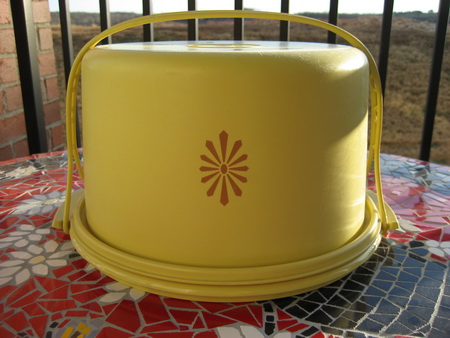
One thing I've learned at my work is that Germans are really into cake. Besides the requisite 4PM "Kaffee und Kuchen" tradition about which guidebooks wax eloquent (which of course is a culturally distinct eating ritual that bears no resemblance to the English preference for 4 o'clock tea or North American celebration of anytime donut), a general interest in cake making and eating seems to take up a large part of the German female brain. And along with this fascination with fondant, leaveners, and cake pops come the requisite accessories. Behold, the cake carrier.
The cake carrier in Germany does not resemble the colourful retro contraption as seen above. Nor is it's presence limited to the households of people who had a few margaritas at a garden party in 1982 and accidentally bought into a complete set of orange and green Tupperware that included a devilled egg holder. The cake carrier of today is usually made of clear, unornamented plastic, either in the shape of a log or a circle. The handle makes it easy to carry, although Germans must be pretty much obliged to be constantly eating cake in order to justify storing one of these things in a tiny German kitchen.
So, the question goes, which came first, the carrier or the cake?
Whatever the answer, cake is important to Germans, as is the ability to renew the cake supply. Knowing how to bake is taken as a given at my workplace. It is assumed that I can whip up all delicacies with vaguely Anglo-American origins, from (Philadelphia) cheese cake with graham crust to hot cross buns to (Starbucks) cake pops. For kids, cake appreciation comes complete with quizzes on the comparative qualities of yeast and sour-cream dough. Don't think that Betty Crocker or time-saving devices have anything to do with this brand of domesticity. One coworker was showing off a photo of the cake she is baking for her cousin's wedding - using a highly coveted German-language cookbook that she snapped up in an ebay bidding war for the bargain price of 130 Euros.
And well, okay, maybe it's expected that childcare professionals have a Martha Stewart thumb, but I can attest that even the ladies of high finance can spend a Sunday afternoon or two crafting pralines for their coworkers. I just don't know if I can ever be thankful for breakroom donut holes ever again.
Tuesday, February 14, 2012
Geschmack: das Fasnetsküchle

Another German holiday, another addictive baked good. The Fasnetsküchle is the official pastry of Mardi Gras in South Germany, which is called Fasnet in Swabian dialect or Fastnacht if you're a consonant-conscious member of the language police. Fasting is part of the post-Mardi Gras tradition (which, for those of you who didn't go to Catholic school, is the pleasure-denying month of Lent), so by way of preparation in the days before Lent, you are free to stuff yourself with as many Fastnetsküchle as possible.
And stuff yourself you will. The Fasnetsküchle itself is a rectangular-shaped Dutchie donut that would melt the heart of any Krispy Kreme lover. Covered with granulated sugar, it is soft, light, and delicious. Due to its ingenious no-hole design, one 'küchle is probably equivalent to at least two normal donuts. Leading up to Fasnet, which is only one week away, they are being sold in local bakeries as three for less than 2 Euros. I am seriously overdue for some fasting.
In fact, I'm pretty excited for this whole Fasnet thing, which is a week-long affair that spreads from Schmotziger Donnerstag to Ash Wednesday. Forget Fat Tuesday, I'm looking forward to Fat Thursday. I thought that this Schmotziger Donnerstag had something to do with spring cleaning, as schmutzig means dirty, but apparently that one little vowel makes all the difference and "schmotz" has something to do with baking and fat. It's a Swabian thing.
According to the banner that has been hanging over the pedestrian zone in Bad Cannstatt here in Stuttgart for the last three weeks, Schmotziger Donnerstag is a mess of parades, charades, races, masks and bizarre medieval traditions that involve cabbages and nightgowns. Bring on the mummery.
image via cafe-baecker-meyer.de
Monday, December 12, 2011
Wirklich? Really?: Wer ist der Letzte?
 |
| The Berlin Immigration Office: obviously more advanced than Stuttgart. |
The story I heard at my language school was about an advanced system of lining up without even standing in line, an endeavour that requires faith in the system and the honest of your fellow line-standers. When entering a bank or a ticket counter, you ask who the last person in line is. Then, having identified the last person, you keep your eye on them in order to know when you are up.
I hadn't seen this system in action, having waited in establishments that rely on numbered tickets rather than good old fashioned honesty, until last week when I was at the immigration office here in Stuttgart. There are two ways of seeing someone at the immigration office: either you phone in several times until someone picks up the phone, tell them your issue, and hope that it is deemed relevant enough to have an appointment scheduled, at which time you show up in a hallway full of people and waiting front of a heavy red door equipped with a loudspeaker. When your name is called, you can go in. The other option, for non-urgent or generally confusing cases, is sitting in an adjacent room that has a door leading to the same office, only which is equipped with a traffic light instead of a speaker. When it flashes green, the next person is welcome. Mostly it just stays discouragingly red.
As you may have guessed from my description of the surroundings - red and brown doors, disembodied voices, built-in chairs - the immigration office is a seriously brutalist building from the 1960s with little in the way of modern amenities. There are no digital signs and no number-printing machines. Instead, as I discovered, there is the system of asking, upon entering the room, "Wer ist der Letzte?"
My brief experience with this system pointed out the reasons it doesn't work in modern Germany. First of all, everybody in the line needs to understand what the question means. At the immigration office, this was understandably not the case. Whenever a newcomer asked who the last person was, there was shuffling of feet and some serious glares until finally someone else pointed out who had been the last to enter the room. While such complete non-responsiveness may have demonstrated an average language competency well below the level required to get most visas, I was surprised by the angry muttering among the askers, who, presumably likewise at the immigration office to immigrate, really didn't have much to get up on their high horse about. I suppose they could have been part of a secret pre-interview test: if you clam up, you've just signed yourself up for a 6-week integration course, courtesy of the German government. Boo hoo.
And to be fair, it wasn't all a question of language. Immigrants are nothing if not willing to cash in on the opportunity created by Germans' stubborn faith in their systems. That's why you can get kebab on a Sunday! Sure enough, each time the chime sounded to switch the light from red to green, there was a group ready to jump to their feet should the next person in line momentarily forget their place in the order of things.
Whether times are a-changing or the system never worked that well after all, the "Wer ist der Letzte?" system doesn't make much sense. Most of us can do numbers - German vocab is a different kettle of fish. And while I realize that a municipal building that caters to foreigners probably sits pretty low on the priority list for taxpayer-funded renovations, we are the ones who need our office to meet the standards of a grocery store meat counter the most.
image via spiegel.de
Friday, December 9, 2011
Wirklich? Really?: Keine Information, Danke

As seen in the Berlin U-Bahn at a concession stand. The sign means "No Information - thanks," and it basically sums up the German attitude towards strangers: keep out. At least they are mostly polite about it.
Wednesday, December 7, 2011
Der Weihnachtsmarkt

After an impromptu visit to the Munich Marienplatz Christmas market, or Weihnachtsmarkt, I think I can definitively say that the Weihnachtsmarkt in Stuttgart is really the best in southern Germany. The market spreads out along the downtown core of the city centre, takes up three big squares, is filled with folksily decorated stalls heavy on the fir branches, and has made drinking alcohol at 10 in the morning not only socially acceptable, but seasonally appropriate for women, children, and grandpas of all ages. As I have visited the Weihnachtsmarkt at 10 in the morning three times this week, I can confirm that thanks to the abundance of Glühwein, a mulled wine Christmas drink served in hideous collectible mugs, the crowd is almost as boisterous on a Monday morning as on a weekend afternoon. And unlike the Munich Weihnachtsmarkt, which has more than its fair share of plastic Weihnachtmänner (that's Santa to you) and snowmen, the decorating team at Stuttgart really dug deep into their Martha Stewart back catalogue to pull out some fairy tale scenes, including toy trains that chug along the roofs, a giant Three Wise Men Weihnachtspyramide, a carved nativity scene or two, and enough pine cones, berries, and boughs to fill a forest or two.

And, although the amount of Glühwein guzzling that is going on might lead you to believe otherwise, it's not even cold. There is nary a snow bank in the dioramas of typical German winter scenes that perch atop the stalls. No snowflakes, plastic or otherwise, dangle from Christmas trees or lampposts. The middle school kids bringing their recently acquired clarinet skills to the outdoor market in the form of repeated squeaky renditions of O, Christmas Tree steer clear of songs that even mention the word snow, let alone ask for it. The only place I've seen any representation of snow is on the Weihnachtmarkt's website, where some over-zealous web designer has animated some snow onto an image of Stuttgart's city hall square. (They've also included the only two standing pre-19th century buildings in the downtown core in their composite image, so the idea that the image represents Stuttgart's reality should be taken with a grain of rock salt.) It's actually all quite autumnal, if it weren't for the (artificially frozen) outdoor skating rink and the crowds, maniacally intent on purchasing wooden Christmas ornaments.
Aside from the Christmas ornament stalls, at the market you can buy literally everything in the arts-and-crafts gamut of Christmas giving. Knitted booties? Check. Beeswax candles? Check. Aprons embroidered with "Kiss the Cook" in Swabian dialect? Oh, yeah. There's even a whole aisle devoted to the kind of gadgets that you might recognize from late night infomercials. You can also get almost any kind of Swabian food here hot off the grill and straight from the hands of somebody's Oma - from Swabian ravioli, aka Maultaschen, to Alsatian pizza, or Flammkuchen. Last but not least, for those who really want to know what they're getting for Christmas, the Stuttgarter Weihnachtsmarkt has its own not-so-live webcam in the biggest of the squares. See for yourself exactly how not snowy it is here.

image via stuttgarter-weihnachtsmarkt.de
Monday, December 5, 2011
Wirklich? Really?: Royalty

Who knew that Europe still was ruled by kings and queens? And there's not just Kate and William, but who could forget Silvia and Carl Gustaf, Letizia and Filippe, and, last but not least, Mette-Marit and Haakon? There is a steady stream of royal weddings ready to fill out half the pages of every European-based gossip magazine before they even get around to documenting Christina Aguilera's bad hair days.
And it's not only the affairs of those choice ruling royal houses who somehow escaped the "off-with-their-heads" portion of European history that make the news. The deposed and otherwise long-forgotten descendants of the royals of Europe have been quietly filing their comings and goings with rag-trade papers as well. According to Frau magazine, the family of the ex-King of Romania gathered to celebrate his 90th birthday last month, among whose guests were the Princesses of Liechtenstein, the crown prince of Yugoslavia, and both the Prince and the Markgraf of Baden. (That's Baden as in Baden-Württemberg, the modern left-leaning German state of which Stuttgart is the manufacturing centre.) Whyever did the Emperor of Mexico fail to grace them with his presence?
While I thought that the only remaining socialites were the drug-addict great-grandchildren of oil barons and coal magnates, and that the septuagenarian descendants of deposed monarchs were only kept in funny hats by their British cousins in order to be trotted out at ceremonial gatherings, it turns out that the ruling classes of Europe are very much alive and socializing. Take, for example, the Tiffany ball profiled in the back of Instyle Germany, which boasted a Gräfin, a couple "zu Whatsits", and a "von Wherever". Those little words mean they're royal, even if they're being coy about whether their great-grandfather was an Erzherzog or a Fürst.
image via novinite.com
Saturday, November 26, 2011
Geschmack: Hanselmännchen und Butternikolaus

Yum.
Let me introduce you to my two new best friends, Hanselmännchen and Butternikolaus. I'm not sure who I like better. Hansel is a soft sweet bun shaped like a little man with raisin eyes. Nikolaus, sporting a jaunty white cap, is a butter cookie as big as a plate. I am also getting to know Butternikolaus's cousin, Quarkteig-Nikolaus, but he has some political views that I am not very keen on.

Sadly, they are here for a limited time only. These seasonal baked goods are here to celebrate the period between St Martin's Day, which was a little while back (I'm not exactly sure when or why, but there was a goose dinner and excited children involved) and St Nicholas's Day on December 6, at which point they will head back to the North Pole or a candy cane witch's house or wherever seasonal baked goods spend the rest of the season. What Hansel has to do with either Martin or Nicholas I am not sure, and the ladies at my local bakery seem to think its strange that I have any questions about the fact that they are selling baby-sized man-shaped cakes. I'm not looking forward to a December without these guys.
Really, these pastries are way too big for a single person, but, due to their anthropomorphic qualities, they are also very difficult to share. Who wants to draw and quarter St Nick? There's something a little sad about going back for seconds to a sticky pastry box emptied of everything but a left arm and right leg.
image via chefkoch.de
Sunday, November 13, 2011
Word Up: Lebenslauf

I have to admit that I really like this word. Here the Germans for once resist the temptation to steal a word from another language and make it German by pronouncing it wrong (see: Marketing, Project Manager, Download), and as a result the concept is that much easier to understand. English speakers should take note. After all, curriculum vitae has way too many syllables, and CV has too few. Plus, you may have guessed it was Latin, but did you know it is Latin for "course of life"? Well, Lebenslauf is German for "course of life." English for "course of life"? Resumé, naturally.
However, just when you think that you can add this word to your set of flashcards no problem comes the knowledge that a CV in Germany is not like the others. There are some major differences.
In some ways, a German CV keeps it simple. No fooling around with different templates on Microsoft Word or worrying whether the dates should go to the left or the right. Two columns, as many pages as necessary.
Don't congratulate yourself on being able to pass off your resumé as the product of any another German just yet. A CV in Germany also has a photo of a smiling you looking your most friendly, attractive, and ethnically identifiable. At first this seems a little unfair, but, if you think about it, you're going to be judged based on your appearance and potential effects that appearance will have on the company your are joining at some point in the application process, whether positively or negatively, no matter what the lawyer-approved policies circulating at your workplace liberally state. And, ultimately, letting somebody know that you favour hockey-themed neckties, do not own a suit jacket, or come from a persecuted ethnic minority early on in the game is really probably best for both parties involved.
The last thing that sets a German CV apart from your run-of-the-mill resumé is that you sign and date it at the bottom. Germans really have a love affair with legal documents; the more swearing and signing, the better. So you have to certify your resumé, hobbies and all, to be the whole truth and nothing but. To be honest, if you're going to lie about your work experience, you're probably prepared to swear it's the truth on your mother's grave as well.

Sunday, October 9, 2011
Wirklich? Really?: Jugendschutz

But, 8:15 on a Sunday is not a great time to catch a TV show when your weekends are your only chance to escape Stuttgart thanks to cheap weekend train tickets. Plus, TV shows generally screen at weird quarter-hour intervals here and then last for frustratingly long amounts of time, which means that when a channel tries to schedule a 44 minute American TV show into an hour-and-fifteen minute slot, they have to introduce extra advertisements. But rather than just have longer advertisements at the intervals clearly indicated by fades-to-black and dramatic cliffhangers, instead German TV programmes have one or two excessively long advertisement periods where you could make dinner, clean your kitchen, and forget that you're even watching TV before the show comes back on, in addition to hiccupy little 30-second breaks to even it all out. To add insult to injury, and because you might have read War and Peace in your downtime, the broadcaster then replays a minute or so of the action from before the commercial break.
Anyway, to avoid all that wasted time and catch up on my Tatort, I had the genius idea of watching the on-demand version of the show after it had aired. But, on the Das Erste site, the public broadcaster responsible for this German gem, what did I find but this message: Aus Jugendschutzgründen stehen Ihnen die Videos jeweils ab 20:00 Uhr bis 6:00 Uhr zur Verfügung, or, to protect young people, the videos are only available after 8PM. I don't know any kid who can navigate the internet well enough to find the Tatort who goes to bed before 8, but I guess Das Erste knows best. Heaven forbid a tween should see one of the Kommissars doing something as outlandishly disrespectful as eating Currywurst in the morgue.
image via t-online.de
Thursday, September 8, 2011
Word Up: etw. in den Griff bekommen, or, How Germans have a Handle on Things

der Griff (m) handle, etw. in den Griff bekommen (idiom) to have control of something, to have the hang of something
Everybody knows that the cheapest place to buy toilet paper is Canadian Tire. That being said, in Toronto, the nearest Canadian Tire to my house was a little over a kilometre away. To add to the problem, it is impossible to stuff a package of 8 rolls of toilet paper in a normal shopping bag without removing the packaging, and if carrying the package without a bag, I ended up clawing at the plastic while trying to find a comfortable grip, inevitably breaking through the plastic and setting the rolls loose. Needless to say, I have arrived home from the store with a ripped package of toilet paper and a lost roll or two more than a couple of times.
Enter German innovation. Why bag something that is essentially already in a bag? The addition of a handle is pure genius. It's good to know that it's not just me who has spent their Saturday chasing rolls of toilet paper down the sidewalk, and it's even better to know that somebody finally found a cure.
Tuesday, September 6, 2011
Geschmack: Johannisbeere (Currants)

Currants don't exactly sing summer to me. As someone whose previous experience of the currant family was limited to Ribena concentrate, I was pretty convinced that currants were the grape's ugly cousin complete with multiplied stain-producing side effects. However, here in Germany escaping currant is not just a matter of skipping out on nasty fruit cakes or passing over the dusty section of juice concentrates at the health food store. Currants are in everything - stuffed in pastries, baked into cakes like the Linzertorte, boiled down to produce a dead-ringer cranberry-like sauce with meats, and as a fresh garnish with everything from ice cream sundaes to sausage dumplings. And, of course, they are plentiful throughout the summer at the farmer's market, where they are cheap and somehow the season seems to never end.
I first ventured into red currant eating as a result of making Rote Grütze, a tart northern German dessert that involves boiling down red fruits including the currant to make a jelly that is then served with vanilla sauce. Thanks to a high rate of irresistibility, only half of raspberries and strawberries purchased for prepared desserts ever make it through the washing phase to the bowl. Likewise, faced with a box of corn-pop-sized currants, with tiny thread-like little stems to be plucked from each one, I soon discovered that the more I ate, the fewer I had to stem. While the first couple result in the sour-faced, knee jerk reaction of "why did I eat that?" and "that was definitely not a raspberry," after thus absent-mindedly munching through half a box of currants, it's safe to say that your taste is fully formed.
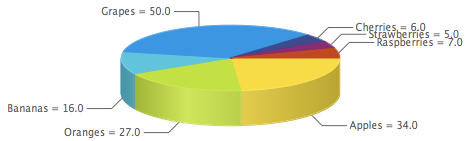
Pictured we have white currants, possibly the best possible currant - sweet, fresh and absolutely non-staining, should you be prone to that sort of accident.
Thursday, July 14, 2011
Word Up: die Schultüte

die Schultüte f school cone [cardboard cone filled with treats or small presents]
You know that point in July where television stations start advertising school supplies and all the newspapers are bursting with bright primary-coloured flyers promising back-to-school sales? As a kid, it feels like you're barely out of school and already everybody's revving up to put you back in. Well, here in Germany, they have taken the spoonful-of-sugar philosophy to heart. So alongside window displays with cartoon-scrawled backpacks and virgin sets of coloured pencils, there are rows of the raw materials for making Schultüte.
At first glance, the huge stacks of bristol board cones to be found among the school supplies make it seem like the Germans, as part of their commitment to preserving traditional culture and all things old-timey (and postcard-perfect), are preparing to stock up on dunce caps for the school season. Worry not, Charlie Brown. Instead, these caps are going to be tipped upside down like an ice cream cone and lovingly filled with pencils, notebooks, and a whole lot of candy, dolled up with ribbons, bows and scrapbooking accessories and doled out by parents on the very first day of primary school. Sorry, that means you're out of luck, Grade Twos.
To me, this seems like a pretty sweet deal. There is nothing I would have love more on my first day of school than Gobstoppers and Popeye Sticks. Instead, I distinctly remember rice pudding and raisins. On the other hand, I'm sure teachers of Grade One must require some special training day to learn how to deal with kids suffering not only from the emotional strain of being forced to learn the alphabet but also experiencing some major sugar fallout. Luckily, school in Germany only lasts 4 hours - from 9AM to 1PM - so at least teachers get the satisfaction of handing back still-twitching six-year-olds to their parents before the sugar rush has completely worn off.
Saturday, June 4, 2011
Word Up: Express Service

There’s no word for express service in German because the concept doesn’t exist in Germany. Everything takes forever, from telephone installation to dry cleaning to email replies. Forget what you’ve heard about Germans being punctual as well: any given service you order probably won’t be ready at the time specified. This total disregard for punctuality also goes for trains, appointments, and village clock towers.
Of course, the absence of express service probably contributes a lot to the German quality of living. If deadlines are flexible, and nobody expects anything to done by tomorrow, let alone yesterday, everybody can just take it a little bit easy. People can leave work on time. Shops can close at 6 PM. TV primetime jumps forward to 8PM. Nobody stays glued to the TV until 11PM waiting for the results from Dancing with the Stars. A perfect world.
But, if you are used to getting your grocery shopping done on a Sunday or have your shoes fixed within the week, it is unbelievably frustrating. You have to plan ahead. Even remembering that there is no such thing as a convenience store is a lot harder than you would expect. It takes a lot of the spontaneity out of something like a Sunday afternoon picnic. On the other hand, because everything is closed on Sunday except ice cream stands and Greek restaurants, relaxation is almost mandatory. You can basically guarantee that, rather than catching up on paperwork or working a thankless retail shift, your friends will be available for said picnic - unless they’ve made a date to go hiking in the Schwarzwald or boating on the Bodensee or something equally sporty and carefree.
Subscribe to:
Posts (Atom)